
Geralt of Rivia (![[personal profile]](https://www.dreamwidth.org/img/silk/identity/user.png) willnotchoose) wrote2022-01-15 12:39 pm
willnotchoose) wrote2022-01-15 12:39 pm
willnotchoose) wrote2022-01-15 12:39 pm


(no subject)
→ OOC INFO
Name: KaOS
Contact: plurk (eldritchhorror#9890) or plurk (orderfromka0s)
Timezone: est
Over 18?: yup!
Other Characters: none
→ IC INFO
Character Name/Alias: Geralt of Rivia
Character age: chronologically 103, physically late 30s-early 40s
Canon: The Witcher (Netflix)
Canon point: tail end of season 1, while wandering through the woods in search of Ciri
History: an episode by episode overview can be found here
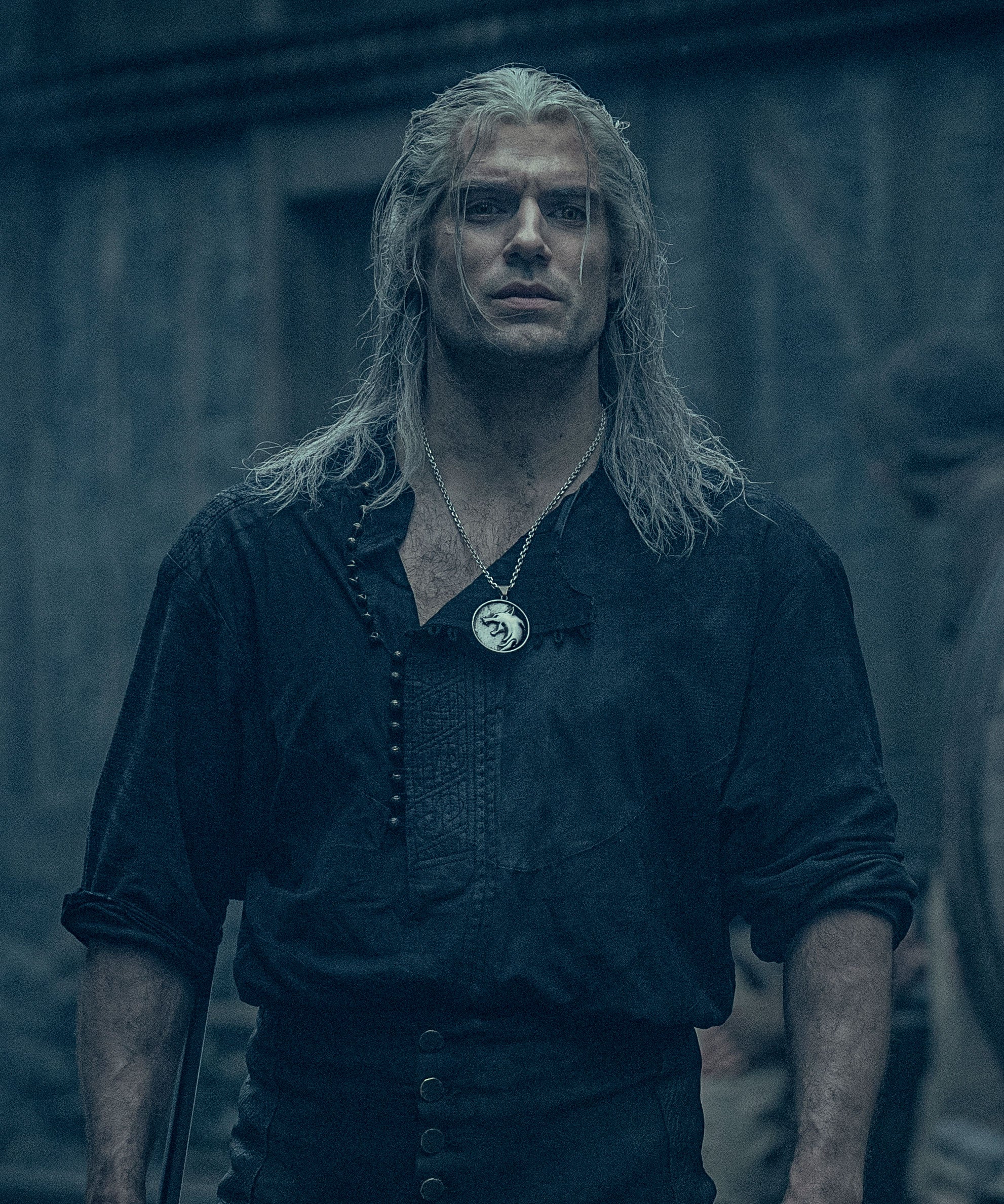
Appearance: have a link!. It's also worth noting his canines are a little sharper than those of ordinary humans, his skin tends to be closer to deathly pale in bright light, and his irises are yellow rimmed in red.
Personality: Witchers, allegedly, are emotionless creatures. Unfeeling, all but inhuman to hear most tell it, and under most circumstances Geralt wouldn't argue otherwise. Because it's not entirely inaccurate; he was made, forged through alchemy and magic and intensive training to be a weapon of man. Most social cues and mores escape him, he can barely hold a normal conversation if it isn't about work, and he's far more likely to run away from kindness than towards it because it's just not something he's experienced much of in his life. He was only a child when the process started, a fate he had no say in, and without normal rearing, with the emphasis on ability and strength rather than empathy or morality, essentially raised in a military academy environment where any modicum of humanity or empathy was discouraged, it's honestly a wonder he came out as well-adjusted as he has.
For a given value, anyway.
Geralt sees himself through the lens of others more than his own. He's grown resigned to his particular existence over the years, but it's generally taken the shape of bitterness for what could have been and a general heartfelt belief that the universe operates on randomness and selfishness rather than by any greater power. He doesn't believe in gods of any kind, although he'll at least acknowledge others aren't inherently wrong for doing otherwise. He exists to kill monsters, his worth measured in his ability to kill monsters and stay alive, and that alone, because that's the only lesson he's ever learned in that regard. Before Yennefer he only ever paid for sex, and Yennefer ended in misery because emotions got in the way. ...well. Emotions, moral disagreements, and a djinn wish, but that's all details.
Because despite what the rumor is, he's not wholly emotionless, only extremely stunted. He either stuffs them down or gives into them at the worst moments, a bull in a china shop hurting everyone in his vicinity because he's never learned tact, lashing out at friends with cruel words when his own feelings are hurt because he doesn't know how to process, whether or not they're deserved or even the right target. He's blunt and reserved in most instances, but holds his true feelings close to his chest because they're more fragile than he likes to let on, and keeping them out of sight and unacknowledged is too deeply ingrained. Emotions are a weakness Witchers aren't allowed. When he ultimately makes friends they're friends to his last breath even if he won't say the word out loud, his own life risked for theirs over and over because he has very little regard for his own. Geralt lets others think he has no emotions, but the reality is he feels deeply, he just doesn't always know what to do with them, or how to articulate, and continually puts himself last because he's only a tool. A weapon. An instrument to be used, no more and no less. Most days it's highly debatable whether he even still sees himself as human or not.
But despite all that, and despite the particular flavor of his training, he's still managed to form his own kind of code. He won't kill sentient monsters, or those that aren't a threat so much as in a bad position of their own. Won't perform assassinations no matter how much money is offered or how 'necessary' it's claimed to be. He never takes more than what is owed him, and only ever reneges on a deal if it was found to have a false pretense at the start. He won't abandon a friend, and acts to try to mitigate loss of life on all sides if he can, preferring to find a less violent solution if possible, even going so far as to negotiate his and Jaskier's freedom by reasoning with elves rather than the more violent bent the bard was trying to advocate for. He keeps himself out of the affairs of humans as much as he can, choosing instead to tread in the middle ground, to live in the greys; when asked to kill Stregobor, a sorceror, or Renfri, a magically-inclined princess said to bring about the end of the world, because of a perceived 'lesser evil' to be chosen, he refuses both of them. As far as he's concerned evil is evil, no matter the shape or degree, and the evils that concern men, the ones that aren't monsters, aren't his business to solve. If he chooses to help the sorceror then a woman who didn't choose the destiny claimed about her dies and there's no way to know if the end of the world was actually stopped. If he chooses to help the young woman then maybe the end of the world will come, but there's no way to know until it happens. There's no way to know which is the right answer, which is truly the worse evil, so he chooses neither, in the end having to kill Renfri in self defense and getting run out of town, labelled the Butcher of Blaviken, an event that still haunts him because there was no way to know if he acted rightly. If he caused more harm or prevented it. He intervened when Queen Kalanthe ordered a man cursed to be a monster during the day killed, refusing to carry it out despite her insistence he was a monster that needed tk be dispatched because he recognized the man wasn't a monster. A cursed man is still a man, after all, and should not be killed only for existing, especially if there is no tangible threat. He managed to break a curse on a striga for the same reason; strigas are made through a curse, and if the curse can be broken the one who was cursed can be restored. He found the source, and used the one who caused it as bait to ensure the requirements, namely that someone keep it out if its crypt until a rooster crows 3 times, thereby successfully breaking the curse and allowing the king to get his daughter back. Because that's ultimately what the code is supposed to preserve. To provide a framework for How to Behave, How to Nagivate the World. Hunt the monsters that kill people indiscriminately, but don't kill humans for money because he was created to protect from the monsters lurking in the shadows, not to meddle in human affairs. Those who attack him, however, are fair game, so long as they're actually trying to kill him, and those who are cruel or terrible people, those who act to harm others deliberately, are acceptable losses if it comes to it. Intelligent 'monsters' aren't monsters; elves, dryads, mermaids, cursed folks, and so on and so forth, anything capable of reasoned communication, are regarded with empathy and therefore off the table for hunting. Because honestly he relates better to the 'misfits', to the other unwanted races, than humans most of the time.
Even with his sort-of-code, however, it's not without its own rocky edges. Due to his upbringing, or more accurately the fact he had no choice in any of it, he has a rather tempestuous relationship with the idea of Fate and Destiny, choosing to fight it every step of the way and give it the metaphorical middle finger whenever possible. Even when it bites him in the ass to do so. He feels trapped in his own life since it's based upon the choices of others with no escape he can see, so he rails against The Inevitable, to the point where he abandoned a child he'd inadvertently claimed, only more recently finally accepting his responsibility in that. The claim, an ancient understanding that's said to bind two people by destiny, was made out of cynicism, a throwaway bitter joke when asked for what could be made as payment for breaking a curse, and in his disdain for the practice, and destiny in general, he abandoned the child of Surprise that was fated to be his, only finally returning to claim her after effectively being shamed by the woman he loves for spurning his only chance at having a child while she tries so hard to have one of her own to no avail. He's spent most of his life at best despising the idea of destiny and at worst not believing in it at all, since, as the saying goes, "the sword of destiny has two edges; you are one of them and the other is death" and as far as he's concerned all he spreads is death anyway. Destiny's pointless, but after a fever-dream conversation with his mother he's started to rethink it a little. He found Ciri again by accident after losing her, after all, events lining up just right (or they would have if he'd made it to the cottage anyway), so maybe, MAYBE, there's something to it.
Geralt has spent a vast majority of his life trying to fill a void inside himself he doesn't know how to fill. He's resigned to never having a family of his own, and the fear most regard him with; he's a weapon to be used, nothing more or less, worth only the value others ascribe to him, and consequently his main motivation amounts to keeping busy and staying Useful until he eventually grows too slow and is killed, since trying to fill an unknowable void hasn't exactly gone well in the past.
What did they do to end up here?: While ostensibly Witchers were created to Do Good, to protect the humans they were sent to live among, they have a bit of a reputation for being especially gruff and brutal about it. Their training taught them how to hunt and kill but not much in the way of how to interact with "normal" people, or even much of a moral code, so they are very commonly employed as mercenaries rather than anything especially lofty or reputable. Consequently, while Geralt himself does tend to try to adhere to his own code of conduct, it's nevertheless pretty sparse. He has no issue with killing ordinary humans if they get in his way, even if it's literally something as simple as "they picked a fight and wouldn't back down". He will willingly abandon weaker people if they slow him down, or outright use people as bait for monsters, not caring if they get killed in the process. He refuses to pick sides in "mortal matters", which has already gotten more than one person killed because of his refusal to act.
Powers / Abilities: At baseline, Geralt's essentially a human who's been turned up to 13. The various processes he was put through as a child to turn him into a Witcher have amplified natural human ability; he's far more durable, stronger, faster, and dextrous than even the most athletic human of his size and build, with keener hearing and smell and eyes he can adjust himself to be able to see in relative darkness. The processes also make him heal faster (although not significantly so; he still scars and he can still be killed, he just won't bleed out quite as fast and is less likely to be prone to infection), and age slower, and make him immune to just about any poison. He can do simple combat magic, called 'signs' in his world, rudimentary things like conjuring fire or pushing someone back that only last as long as he can maintain the gesture. He's been trained in every form of medieval weapon, and has combat skills equivalent to the most elite military group in terms of brutality, efficiency, and effectiveness. He knows something of herbalism, at least enough to make Witcher elixirs, can recognize what's safe to eat and what isn't in the woods, and knows how to live and survive in the wilderness.
A Witcher's true strength, however, or at least the thing that pushes them even further over the edge into Extra, are the aforementioned elixirs. When drank, they can amplify their abilities even further, from healing to durability to complete control over their bodies. They would be lethal to anyone else, and even so take a toll on Witchers themselves, leaving them exhausted and weak for hours once they wear off.
Inventory: Witcher's medallion, Witcher's armor, and 1 Swallow elixir (healing potion basically)
Samples: one
two
Name: KaOS
Contact: plurk (eldritchhorror#9890) or plurk (orderfromka0s)
Timezone: est
Over 18?: yup!
Other Characters: none
→ IC INFO
Character Name/Alias: Geralt of Rivia
Character age: chronologically 103, physically late 30s-early 40s
Canon: The Witcher (Netflix)
Canon point: tail end of season 1, while wandering through the woods in search of Ciri
History: an episode by episode overview can be found here
Appearance: have a link!. It's also worth noting his canines are a little sharper than those of ordinary humans, his skin tends to be closer to deathly pale in bright light, and his irises are yellow rimmed in red.
Personality: Witchers, allegedly, are emotionless creatures. Unfeeling, all but inhuman to hear most tell it, and under most circumstances Geralt wouldn't argue otherwise. Because it's not entirely inaccurate; he was made, forged through alchemy and magic and intensive training to be a weapon of man. Most social cues and mores escape him, he can barely hold a normal conversation if it isn't about work, and he's far more likely to run away from kindness than towards it because it's just not something he's experienced much of in his life. He was only a child when the process started, a fate he had no say in, and without normal rearing, with the emphasis on ability and strength rather than empathy or morality, essentially raised in a military academy environment where any modicum of humanity or empathy was discouraged, it's honestly a wonder he came out as well-adjusted as he has.
For a given value, anyway.
Geralt sees himself through the lens of others more than his own. He's grown resigned to his particular existence over the years, but it's generally taken the shape of bitterness for what could have been and a general heartfelt belief that the universe operates on randomness and selfishness rather than by any greater power. He doesn't believe in gods of any kind, although he'll at least acknowledge others aren't inherently wrong for doing otherwise. He exists to kill monsters, his worth measured in his ability to kill monsters and stay alive, and that alone, because that's the only lesson he's ever learned in that regard. Before Yennefer he only ever paid for sex, and Yennefer ended in misery because emotions got in the way. ...well. Emotions, moral disagreements, and a djinn wish, but that's all details.
Because despite what the rumor is, he's not wholly emotionless, only extremely stunted. He either stuffs them down or gives into them at the worst moments, a bull in a china shop hurting everyone in his vicinity because he's never learned tact, lashing out at friends with cruel words when his own feelings are hurt because he doesn't know how to process, whether or not they're deserved or even the right target. He's blunt and reserved in most instances, but holds his true feelings close to his chest because they're more fragile than he likes to let on, and keeping them out of sight and unacknowledged is too deeply ingrained. Emotions are a weakness Witchers aren't allowed. When he ultimately makes friends they're friends to his last breath even if he won't say the word out loud, his own life risked for theirs over and over because he has very little regard for his own. Geralt lets others think he has no emotions, but the reality is he feels deeply, he just doesn't always know what to do with them, or how to articulate, and continually puts himself last because he's only a tool. A weapon. An instrument to be used, no more and no less. Most days it's highly debatable whether he even still sees himself as human or not.
But despite all that, and despite the particular flavor of his training, he's still managed to form his own kind of code. He won't kill sentient monsters, or those that aren't a threat so much as in a bad position of their own. Won't perform assassinations no matter how much money is offered or how 'necessary' it's claimed to be. He never takes more than what is owed him, and only ever reneges on a deal if it was found to have a false pretense at the start. He won't abandon a friend, and acts to try to mitigate loss of life on all sides if he can, preferring to find a less violent solution if possible, even going so far as to negotiate his and Jaskier's freedom by reasoning with elves rather than the more violent bent the bard was trying to advocate for. He keeps himself out of the affairs of humans as much as he can, choosing instead to tread in the middle ground, to live in the greys; when asked to kill Stregobor, a sorceror, or Renfri, a magically-inclined princess said to bring about the end of the world, because of a perceived 'lesser evil' to be chosen, he refuses both of them. As far as he's concerned evil is evil, no matter the shape or degree, and the evils that concern men, the ones that aren't monsters, aren't his business to solve. If he chooses to help the sorceror then a woman who didn't choose the destiny claimed about her dies and there's no way to know if the end of the world was actually stopped. If he chooses to help the young woman then maybe the end of the world will come, but there's no way to know until it happens. There's no way to know which is the right answer, which is truly the worse evil, so he chooses neither, in the end having to kill Renfri in self defense and getting run out of town, labelled the Butcher of Blaviken, an event that still haunts him because there was no way to know if he acted rightly. If he caused more harm or prevented it. He intervened when Queen Kalanthe ordered a man cursed to be a monster during the day killed, refusing to carry it out despite her insistence he was a monster that needed tk be dispatched because he recognized the man wasn't a monster. A cursed man is still a man, after all, and should not be killed only for existing, especially if there is no tangible threat. He managed to break a curse on a striga for the same reason; strigas are made through a curse, and if the curse can be broken the one who was cursed can be restored. He found the source, and used the one who caused it as bait to ensure the requirements, namely that someone keep it out if its crypt until a rooster crows 3 times, thereby successfully breaking the curse and allowing the king to get his daughter back. Because that's ultimately what the code is supposed to preserve. To provide a framework for How to Behave, How to Nagivate the World. Hunt the monsters that kill people indiscriminately, but don't kill humans for money because he was created to protect from the monsters lurking in the shadows, not to meddle in human affairs. Those who attack him, however, are fair game, so long as they're actually trying to kill him, and those who are cruel or terrible people, those who act to harm others deliberately, are acceptable losses if it comes to it. Intelligent 'monsters' aren't monsters; elves, dryads, mermaids, cursed folks, and so on and so forth, anything capable of reasoned communication, are regarded with empathy and therefore off the table for hunting. Because honestly he relates better to the 'misfits', to the other unwanted races, than humans most of the time.
Even with his sort-of-code, however, it's not without its own rocky edges. Due to his upbringing, or more accurately the fact he had no choice in any of it, he has a rather tempestuous relationship with the idea of Fate and Destiny, choosing to fight it every step of the way and give it the metaphorical middle finger whenever possible. Even when it bites him in the ass to do so. He feels trapped in his own life since it's based upon the choices of others with no escape he can see, so he rails against The Inevitable, to the point where he abandoned a child he'd inadvertently claimed, only more recently finally accepting his responsibility in that. The claim, an ancient understanding that's said to bind two people by destiny, was made out of cynicism, a throwaway bitter joke when asked for what could be made as payment for breaking a curse, and in his disdain for the practice, and destiny in general, he abandoned the child of Surprise that was fated to be his, only finally returning to claim her after effectively being shamed by the woman he loves for spurning his only chance at having a child while she tries so hard to have one of her own to no avail. He's spent most of his life at best despising the idea of destiny and at worst not believing in it at all, since, as the saying goes, "the sword of destiny has two edges; you are one of them and the other is death" and as far as he's concerned all he spreads is death anyway. Destiny's pointless, but after a fever-dream conversation with his mother he's started to rethink it a little. He found Ciri again by accident after losing her, after all, events lining up just right (or they would have if he'd made it to the cottage anyway), so maybe, MAYBE, there's something to it.
Geralt has spent a vast majority of his life trying to fill a void inside himself he doesn't know how to fill. He's resigned to never having a family of his own, and the fear most regard him with; he's a weapon to be used, nothing more or less, worth only the value others ascribe to him, and consequently his main motivation amounts to keeping busy and staying Useful until he eventually grows too slow and is killed, since trying to fill an unknowable void hasn't exactly gone well in the past.
What did they do to end up here?: While ostensibly Witchers were created to Do Good, to protect the humans they were sent to live among, they have a bit of a reputation for being especially gruff and brutal about it. Their training taught them how to hunt and kill but not much in the way of how to interact with "normal" people, or even much of a moral code, so they are very commonly employed as mercenaries rather than anything especially lofty or reputable. Consequently, while Geralt himself does tend to try to adhere to his own code of conduct, it's nevertheless pretty sparse. He has no issue with killing ordinary humans if they get in his way, even if it's literally something as simple as "they picked a fight and wouldn't back down". He will willingly abandon weaker people if they slow him down, or outright use people as bait for monsters, not caring if they get killed in the process. He refuses to pick sides in "mortal matters", which has already gotten more than one person killed because of his refusal to act.
Powers / Abilities: At baseline, Geralt's essentially a human who's been turned up to 13. The various processes he was put through as a child to turn him into a Witcher have amplified natural human ability; he's far more durable, stronger, faster, and dextrous than even the most athletic human of his size and build, with keener hearing and smell and eyes he can adjust himself to be able to see in relative darkness. The processes also make him heal faster (although not significantly so; he still scars and he can still be killed, he just won't bleed out quite as fast and is less likely to be prone to infection), and age slower, and make him immune to just about any poison. He can do simple combat magic, called 'signs' in his world, rudimentary things like conjuring fire or pushing someone back that only last as long as he can maintain the gesture. He's been trained in every form of medieval weapon, and has combat skills equivalent to the most elite military group in terms of brutality, efficiency, and effectiveness. He knows something of herbalism, at least enough to make Witcher elixirs, can recognize what's safe to eat and what isn't in the woods, and knows how to live and survive in the wilderness.
A Witcher's true strength, however, or at least the thing that pushes them even further over the edge into Extra, are the aforementioned elixirs. When drank, they can amplify their abilities even further, from healing to durability to complete control over their bodies. They would be lethal to anyone else, and even so take a toll on Witchers themselves, leaving them exhausted and weak for hours once they wear off.
Inventory: Witcher's medallion, Witcher's armor, and 1 Swallow elixir (healing potion basically)
Samples: one
two